Walking Foot Stitching with the Kismet Thread Collection from Aurifil
I'm so excited to offer you this project with the

Kismet Thread Collection that has been created by Aurifil to complement Tamarinis beautiful line from Island Batik. First, I'm thrilled to say that this thread collection is gorgeous. I couldn't have picked a better set if they had offered me the honor of putting together colors for you. Second, this set is done in 28 weight, which makes these threads bold and eye catching even against the brilliant gem stone qualities of the Kismet line of batiks. Finally, as soon as I saw them, I thought of how much fun they would be for straight line quilting with the walking foot. I am not disappointed and you won't be either!

I got this happy little package in the mail and started dreaming up a simple pieced project that would show off the value of these threads in this heavier weight. I don't often quilt with anything heavier than a 30 weight, but a 28 weight is not a great difference. In testing the strength of the thread, I found that it balanced well in the top and in the bobbin and held up extremely well in a tension test, so I wasn't at all concerned about quilting with it. Then I got this glorious idea for a walking foot project and started cutting out the last of my Kismet fabrics.
Here's what you will need:
4 squares measuring 6" x 6"
4 rectangles measuring 6" x 2 1/2"
4 rectangles measuring 8" x 2 1/2"

1. Determine a pleasing layout and begin stitching your sections together.
I worked in quadrants like I was making a large 4 patch.

2. As you add the 6" x 2 1/2" rectangles, press towards the rectangles.

3. As you add the 8" x 2 1/2" rectangles press toward the center.

4. Stitch together your quadrants to finish the oversized block. Your finished piece will measure 15 1/2" x 15 1/2".

5. Mark your piece with straight line designs. I love using my Quilter's Select rulers for this since they don't slip easily and I can see the measurement lines very clearly. My chalk marking pencil showed up beautifully on all of the fabrics I chose. I was aiming for an impression of the Art Deco era as I worked on the designs.

I also aimed for easy designs, simple angles and regular spacing. I occasionally set up instances in which the angled lines would bisect the straight lines.

6. Next I created my quilt sandwich, taping down and oversized backing scrap and layering with a left over piece of batting. Here I'm using the 100% bamboo batting from Winline Textiles, which some of you know I'm fairly in love with. I pinned lightly with safety pins and headed to the machine.

7. Attach the Walking Foot to your machine. If you haven't used your Walking Foot before, the benefit of attaching it is that it behaves like a set of feed dogs for the top of your fabric, helping a quilt sandwich to move evenly through the machine and give you perfect stitches.
To get the best tension from your threads, it's always a good choice to load the same weight of thread in the bobbin as in the top thread. With that in mind, I wound a partial bobbin of each color of thread I chose for this project.

8. Begin stitching. Work from the center outwards as much as possible. Choose color sets that pair well with each other and stand out on the fabrics you're stitching.
Tip: use a test sandwich to see how well you're manipulating your stitching. With a Walking Foot, you want to just act as a guide for your quilt sandwich, allowing the feed dogs to pull the sandwich through the machine at their own pace.

9. Use a self threading needle to bury your thread tails as you move through the project. I try to bury my tails into an area that I'm going to stitch over next, so the buried tail will be locked into place a little more securely with the future stitching.
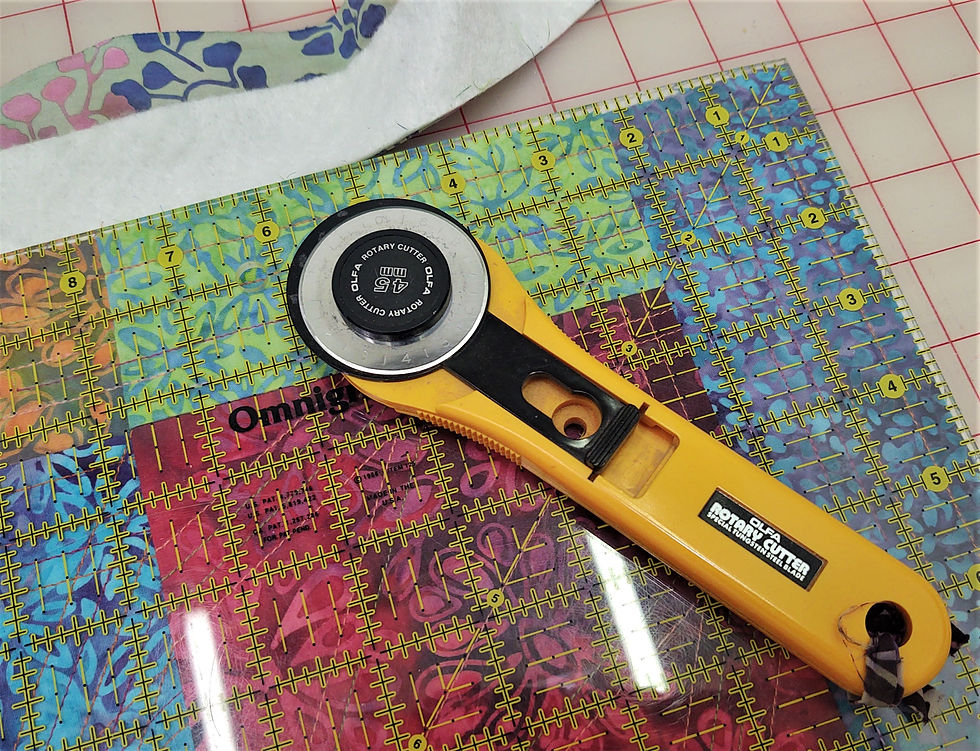
10. Trim the finished piece, taking care to be as square as possible.
Bind in your favorite fashion. See my video on turning corners if you like a clean, well mitered, flat corner.
I'm going to use this project as a cute little table topper as shown in the image at the beginning of this blog. It's perfect to brighten up the breakfast table or put a pop of color on the patio for happy hour. This simple concept is also fabulous to repeat several times and make a bright and happy throw. The sleek lines created with a Walking Foot and some simple marking really show off the thread and allow it to become an equal partner with the fabric. Thank you Tamarinis for another beautiful fabric line and thank you for partnering with Aurifil to bring us this fabulous thread collection that is nothing short of stunning on your fabric!
Get that Walking Foot out quilty friends and be sure to share your own amazing creations with me when you're done!


Does anyone know whether the DG Club app is currently available for Android users? I would also like to know how the installation process works and whether users should check the APK source before installing it.
Even with https://casinimobile.com open on my phone, I’m now thinking about the real gamble: trying 28 weight thread for walking foot quilting. Your tension test balanced so nicely that the Art Deco straight lines suddenly seem achievable instead of risky.
I usually explore the account settings first, and I did that when I opened diuwin for the first time.
I found diu win through a search and decided to look at the interface myself rather than rely on descriptions.
New players often have genuine questions when they first come across a goa games login Answering those questions patiently and explaining things in simple language can make the community more helpful and welcoming for everyone.